
As a candidate country for EU membership, Ukraine has been working across many policy areas to align its legislation and policy practice with the EU Aquis and standards since as early as 2016. In the domain of science and research which is contained under Chapter 25 of the EU Acquis, Ukraine does not have any EU legislation to align with but is expected to undertake a set of reforms in the research and innovation (R&I) sector to enable its effective integration into the European Research Area (ERA). ERA integration is thus a clear objective for Ukraine’s government, and it has been operationalised by the Ministry of Education and Science of Ukraine through the Roadmap for the Integration of Ukraine into the European Research Area (ERA) for the period until 2027. Research infrastructures (RIs) are an important pillar of ERA integration and constitute Structural Policy 2 of the Roadmap.
RIs are considered a key backbone of Europe’s R&I ecosystem and a unique asset for scientific progress, innovation and competitiveness. In the Ukrainian context, RIs are critical vehicles for bringing Ukraine closer to the EU and ensuring country’s sustainable and resilient recovery from the Russian war of aggression.
First of all, collaboration between Ukrainian RIs and the RIs in the EU allows for valuable knowledge sharing and exchange to advance on common scientific and socio-economic challenges. Such collaboration can also build the capacity of the Ukrainian RI community to effectively manage RIs, establish partnerships, deepen their understanding of the ERA, its principles and functions, as well as advance strategic thinking on the value RIs provide to the R&I system in Ukraine and the EU. In addition, Ukraine-EU RIs collaboration is a unique pathway to foster a common technical language and understanding between two R&I systems that have been following distinct trajectories but with significant mutual benefits from cooperation as the geopolitical and economic context evolves.
Second, as the Ukrainian scientific community is mobilised to ensure Ukraine’s resilience in the time of war, RIs serve a platform to perform innovative applied research and develop state-of-the art technologies to address war-related challenges. Such experience in delivering innovative solutions in a crisis is valuable for European counterparts as the EU is confronted with increasing security risks, challenges in navigating green and digital transitions and mitigating the climate crisis.
To realise these benefits of RIs for Ukraine and the EU, though, Ukraine still has some work to do. Currently, the understanding of RIs in Ukraine is in the process of alignment with the way RIs are perceived in the EU. For instance, while the legal definition of RIs in Ukraine is formally aligned with the European definition (amendment to the Law on Scientific and Scientific-Technical Activities, 2026), the research community in Ukraine is yet to integrate the concept of an RI which goes beyond an individual piece of equipment in a laboratory. Furthermore, Ukraine is yet to deliver the landscaping of its RIs followed by the RI Roadmap in line with ESFRI practice. Finally, Ukraine needs to substantially upgrade and modernise its RIs that have suffered from years of under-investment and the consequences of the war and require substantial investments currently unavailable within the national budget.
To respond to the above challenges and to support Ukraine on its ERA integration pathway, EFIS Centre is leading on the development of the landscaping of Ukrainian RIs to inform the pilot RI Roadmap for Ukraine under the Horizon Europe project Research Infrastructures for the Future of Ukraine (RIFF).
The landscaping aims to map available RIs across the six ESFRI domains and provide analysis of scientific potential, trends, gaps and needs, as well as war damage in each of the six domains in Ukraine. In addition, the landscaping will also cover the RI policy context, cross-cutting elements related to challenges and opportunities for Ukrainian RIs and RIs’ role in ERA integration and Ukraine’s sustainable recovery. To deliver this analysis, more than 30 experts were mobilised from Ukraine and the EU during 2026 and an Open Call (expression of interest) was organised in April-July 2026 to gather applications from Ukrainian RIs that wish to be added to the roadmap. The RI Roadmap will further build on the results of the landscaping analysis and will be developed in an inclusive and collaborative way so as to be finalised in October 2027.
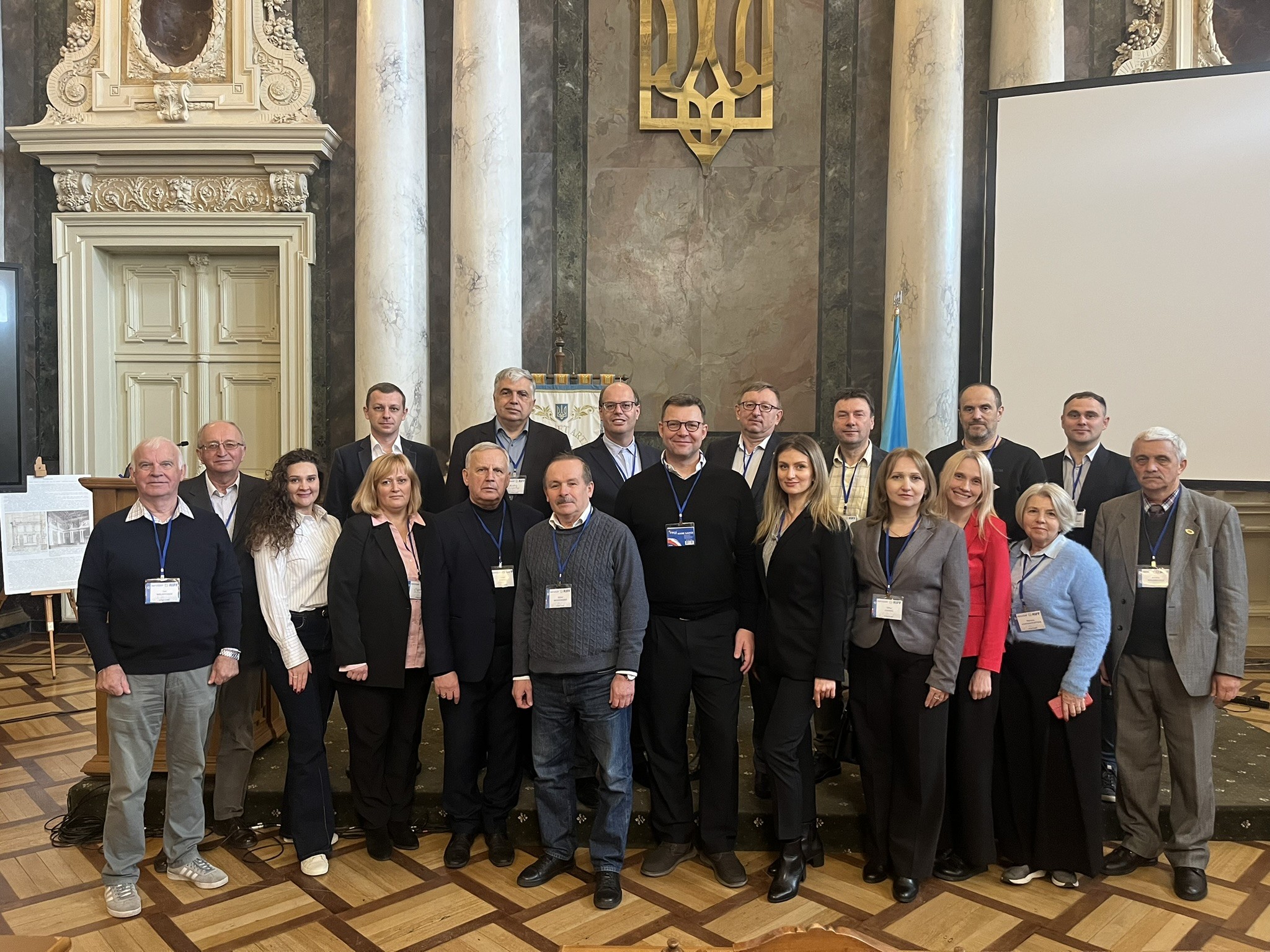
RIFF team at the Lviv Polytechnic University, Ukraine, for the RIFF project Info Day, October 2025
As the project progresses, EFIS Centre remains committed to supporting Ukraine’s research and innovation sector through the International Coalition for Science, Research, and Innovation in Ukraine. During Ukraine Recovery Conference 2026 in Gdansk, EFIS Centre together with 20 Coalition members signed the Gdansk Declaration calling for continued and enhanced support to reforming and recovering Ukrainian science, R&I sector and leveraging it for Ukraine’s sustainable recovery.
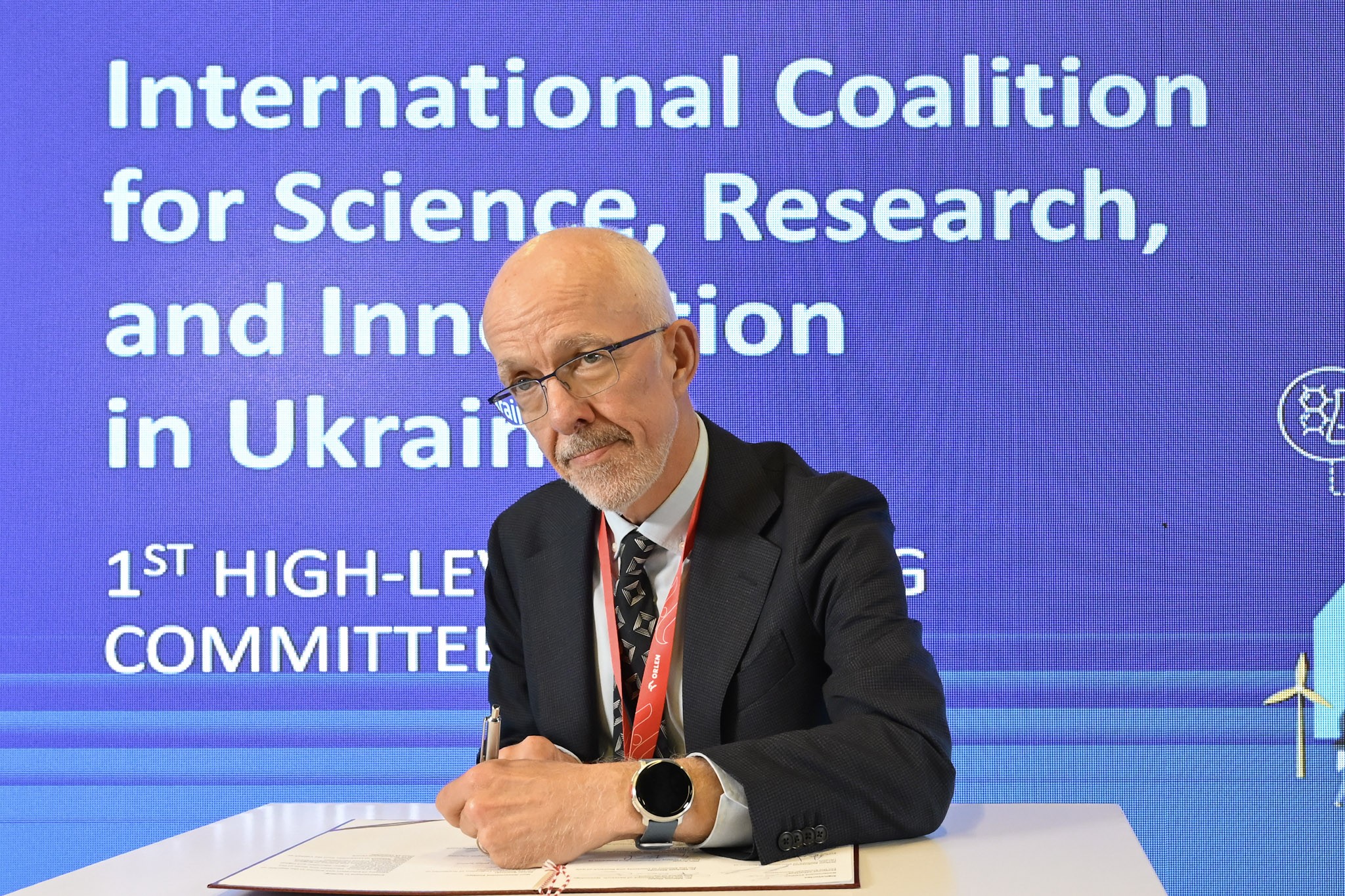
Alasdair Reid, EFIS Centre Executive Director signing the Gdansk Declaration, Gdansk (Poland), 26 June 2026